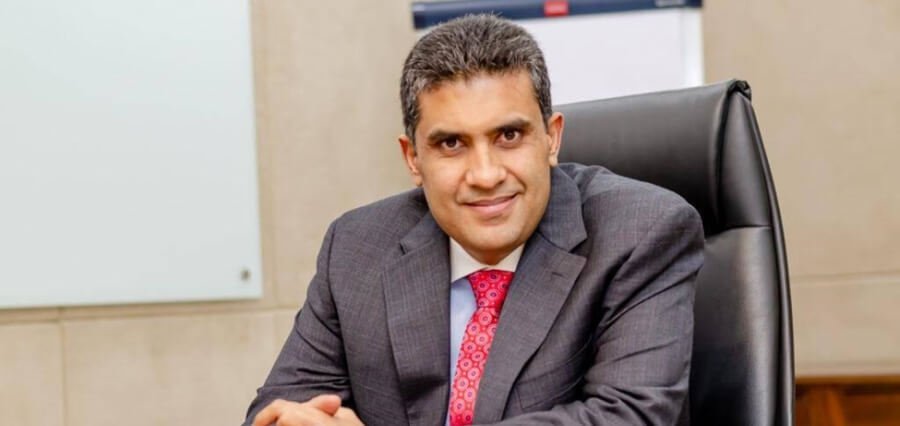
Why a quiet Kenyan entrepreneur is building one of the region’s most connected health systems
When people talk about healthcare in Kenya, the spotlight usually falls on public hospitals, insurance reforms, or donor-funded programs. Rarely does the conversation turn to the private operators quietly shaping how ordinary Kenyans receive care. One of those operators is Jayesh Saini, a healthcare entrepreneur whose name is not widely known outside the sector, but whose work has become central to how millions access outpatient services, diagnostics, and increasingly, hospital care.
Jayesh companies, which include Bliss Healthcare, Lifecare Hospitals, Dinlas Pharma, Fertility Point, and the Lifecare Foundation, do not resemble the typical structure of a private health group. Instead of growing one flagship institution, he has spent years assembling a network of interconnected services: primary care, hospital beds, pharmaceutical production, outreach programs, and digital systems that link to each other.
This level of integration has led some analysts to describe the network as the closest thing East & Central Africa has to a health sector innovation cluster. It is a system where different units reinforce each other instead of operating independently.
A System Built to Reduce Fragmentation
Kenya’s health sector is fragmented almost by design. Public hospitals are stretched, private hospitals tend to concentrate in urban centers, and many small clinics function with little coordination or shared learning.
Saini’s approach has been to create continuity rather than capacity alone. Outpatient centers link to hospitals. Hospitals depend on coordinated pharmacy and supply systems. Outreach programs support early detection, which reduces pressure on clinical facilities. Each part is connected in a way that reduces the gaps that usually cause delays and avoidable complications.
Employees describe this as solving the problem of scattered care. A patient is less likely to slip through cracks simply because systems fail to communicate.
This interconnectedness is one reason some observers draw comparisons to Silicon Valley. The reference is not about high tech but about the principle of building an ecosystem where every component strengthens the others.
Innovation Without Spectacle
Jayesh Saini’s network has adopted technology quietly and practically. Electronic medical records operate across many facilities. Some emergency units use early-stage artificial intelligence tools to help staff identify high-risk patients quickly. Teleconsultation links rural counties to urban specialists. Inventory software helps anticipate stock shortages before they affect patient care.
These tools are not revolutionary on their own. Their impact comes from how they work together. Patients move through the system with fewer repeated tests, fewer delays and far more consistent information.
A senior doctor in Nakuru described it this way:
“Nothing here is for show. The tech is not the headline. It simply helps us work better.”
This understated approach allows the network to test and refine ideas without pressure to hype every initiative.
People First, Systems Second
One of the less visible but most important parts of Saini’s model is the focus on staff development. Nurses receive practical emergency training. Mid-level clinicians rotate between outpatient and inpatient units to build skill and confidence. Administrators learn crisis coordination and patient communication, two areas often overlooked in Kenyan health institutions.
For many employees, this is their first experience with structured professional development inside a private health group.
A nurse in Kiambu explained it simply:
“You are not just placed on duty. They prepare you before they expect you to deliver.”
This emphasis on capability mirrors the principle that made Silicon Valley successful. The ecosystem was built on people, not infrastructure alone.
A Regional Footprint That Shifts Local Outcomes
Beyond Nairobi, Jayesh Saini’s influence is visible in counties where private health investment was minimal for years. In Kisii, Bungoma, Kiambu and other regions, Lifecare hospitals have become referral points for smaller clinics and public facilities. Patients who once traveled long distances for imaging or specialist care now access these services locally.
The presence of these facilities often triggers small but steady economic activity. Pharmacies, food vendors, transport operators and diagnostic services tend to cluster around functioning clinics and hospitals. This creates local microeconomies that grow alongside healthcare access.
County officials note that these facilities often prompt nearby public hospitals to improve internal processes, an indirect but meaningful impact.
Why the Silicon Valley Analogy Appears
The phrase “Africa’s Healthcare Silicon Valley” is not meant literally. It reflects five observed realities.
- Integration of clinics, hospitals, manufacturing and outreach into one system
- Continuous refinement of operations based on data and feedback
- Workforce development at scale rather than reliance on senior specialists alone
- Technology used as a support tool rather than a marketing highlight
- An expansion model that maintains coherence instead of scattering loosely connected facilities
These characteristics position Jayesh Saini not as a builder of isolated hospitals but as one of the few Kenyan healthcare leaders attempting to design a system rather than individual sites.
A Future Still in Progress
Saini describes his work as connecting the dots. Clinics feed into hospitals. Hospitals feed into training programs. Training programs lead to better outcomes. The network evolves in response to real needs rather than abstract strategies.
Whether his model becomes a template for other African regions remains to be seen. But it already demonstrates one clear lesson. Healthcare systems improve not only by adding new buildings but by linking the ones that exist.
In that sense, the comparison to Silicon Valley feels appropriate. It is not about the technology. It is about creating a health ecosystem that learns, adapts and functions as a whole.
And that is the story behind Jayesh Saini’s growing influence on East & Central Africa’s healthcare landscape.
Disclaimer –
This article is a work of original content created for public relations and informational purposes only. It may be published across multiple digital platforms with the full knowledge and consent of the author/publisher. All images, logos, and referenced names are the property of their respective owners and used here solely for illustrative or informational purposes. Unauthorized reproduction, distribution, or modification of this article without prior written permission from the original publisher is strictly prohibited. Any resemblance to other content is purely coincidental or used under fair use policy with proper attribution.